Pet Portraits on Wood, Canvas, Metal or Paper: Which Is Best?
Wood, canvas, metal, acrylic or fine-art paper: how each pet portrait surface looks, handles glare and lasts, and which one suits your dog's portrait.
When you order a portrait of your dog, the surface it's printed on shapes everything: how detailed the fur looks, how the colors hold up, how it catches the light, and whether it reads as decor or as real art. The five most common choices are wood, canvas, metal, acrylic and fine-art paper.
The short answer: wood has rustic charm, canvas is affordable and casual, metal and acrylic are bold and glossy, and framed fine-art paper gives the most detail and the longest life.
Side by side
| Look | Detail in fur and eyes | Glare | Best for | |
|---|---|---|---|---|
| Wood | Warm, rustic; grain shows through light areas | Limited | Low | Cabins, farmhouse rooms, small gifts |
| Canvas | Soft, textured, painterly | Softened by the weave | Low | Large sizes on a budget, casual rooms |
| Metal | Glossy, vivid, modern | High | High on gloss finishes | Modern spaces, offices, bold color |
| Acrylic face-mount | Deep, luminous, frameless | High | High | Contemporary interiors with controlled light |
| Fine-art paper (framed) | Crisp, deep, gallery-like | Highest | Very low behind glare-resistant acrylic | Living rooms, memorials, heirloom pieces |
Pet portraits on wood
Printing directly onto wood creates a warm, rustic piece where the natural grain becomes part of the image. It suits cabins, farmhouse interiors and small tabletop gifts. The trade-off: light areas let the grain show through, which can muddy pale coats, and fine detail depends on the wood and the printing. Most wood prints hang without glazing, so they're exposed to light, dust and fingerprints.
Pet portraits on canvas
Canvas is popular because it's affordable at large sizes and needs no frame. Its woven texture gives a soft, painterly feel but also blurs whiskers, eyes and fine fur, and quality varies enormously. We compare it in detail in canvas vs. framed pet portraits.
Pet portraits on metal
Metal prints are made by fusing dyes into coated aluminum. Colors are vivid and saturated, detail is sharp, and the surface is easy to wipe clean, which makes metal a good fit for modern rooms, offices and kitchens. The catch is the finish: glossy metal reflects windows and lamps strongly, and the saturated look can make a dog's coat appear less natural. Matte finishes reduce glare but soften the effect.
Acrylic face-mounted prints
An acrylic face-mount bonds a photographic print behind a thick sheet of clear acrylic. The result is luminous and deep, with a frameless, contemporary look. It's striking in the right room but expensive at large sizes, heavy, and highly reflective unless you pay for an anti-glare sheet. Scratches in the acrylic face can't be fixed.
Pet portraits on fine-art paper
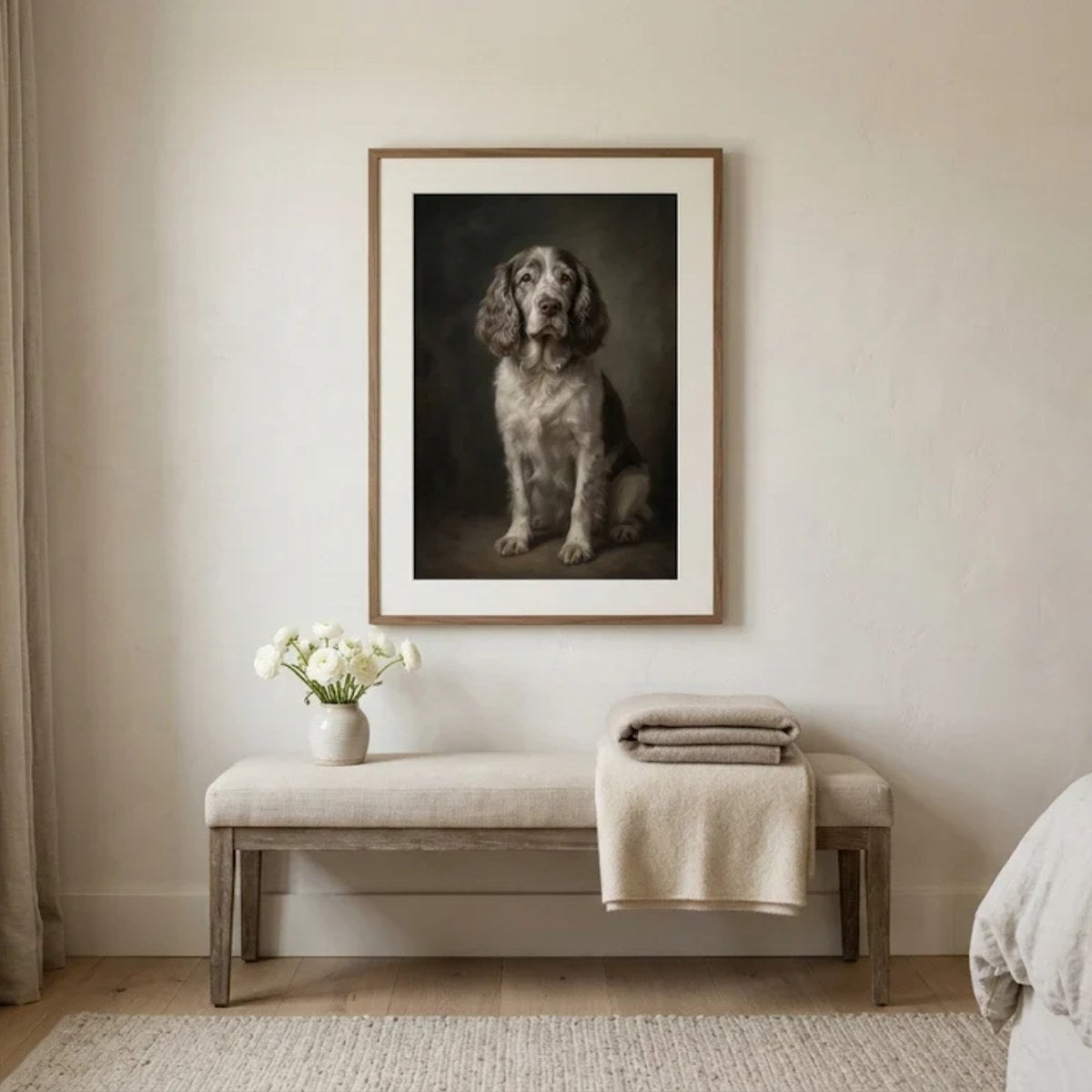
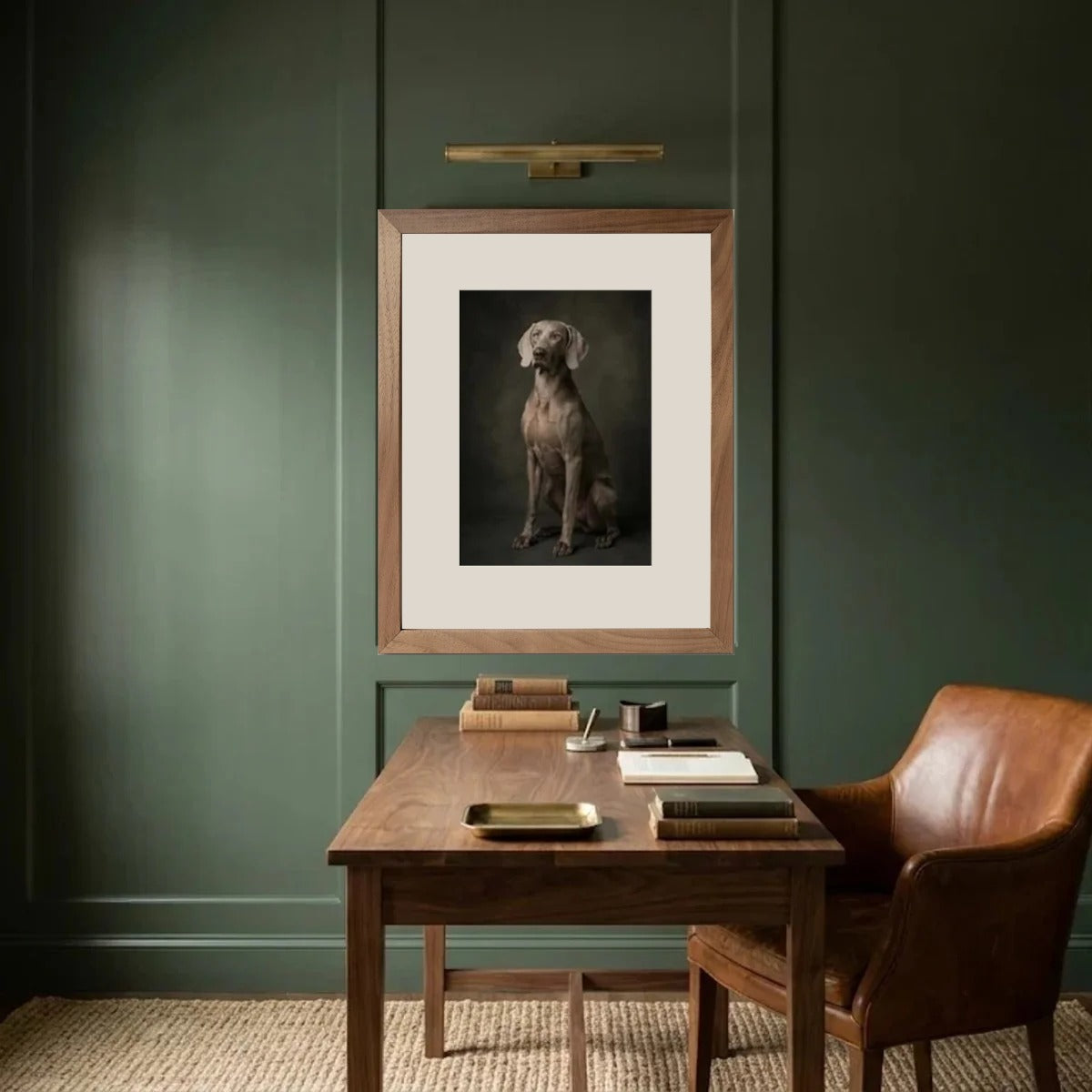
Cotton fine-art papers such as Hahnemühle Photo Rag are what galleries and museums use for photography. They hold the deepest blacks and the finest detail, so black coats keep their depth and white coats keep their texture. The matte surface has no sheen of its own, so the image reads like a photograph or painting rather than a screen.
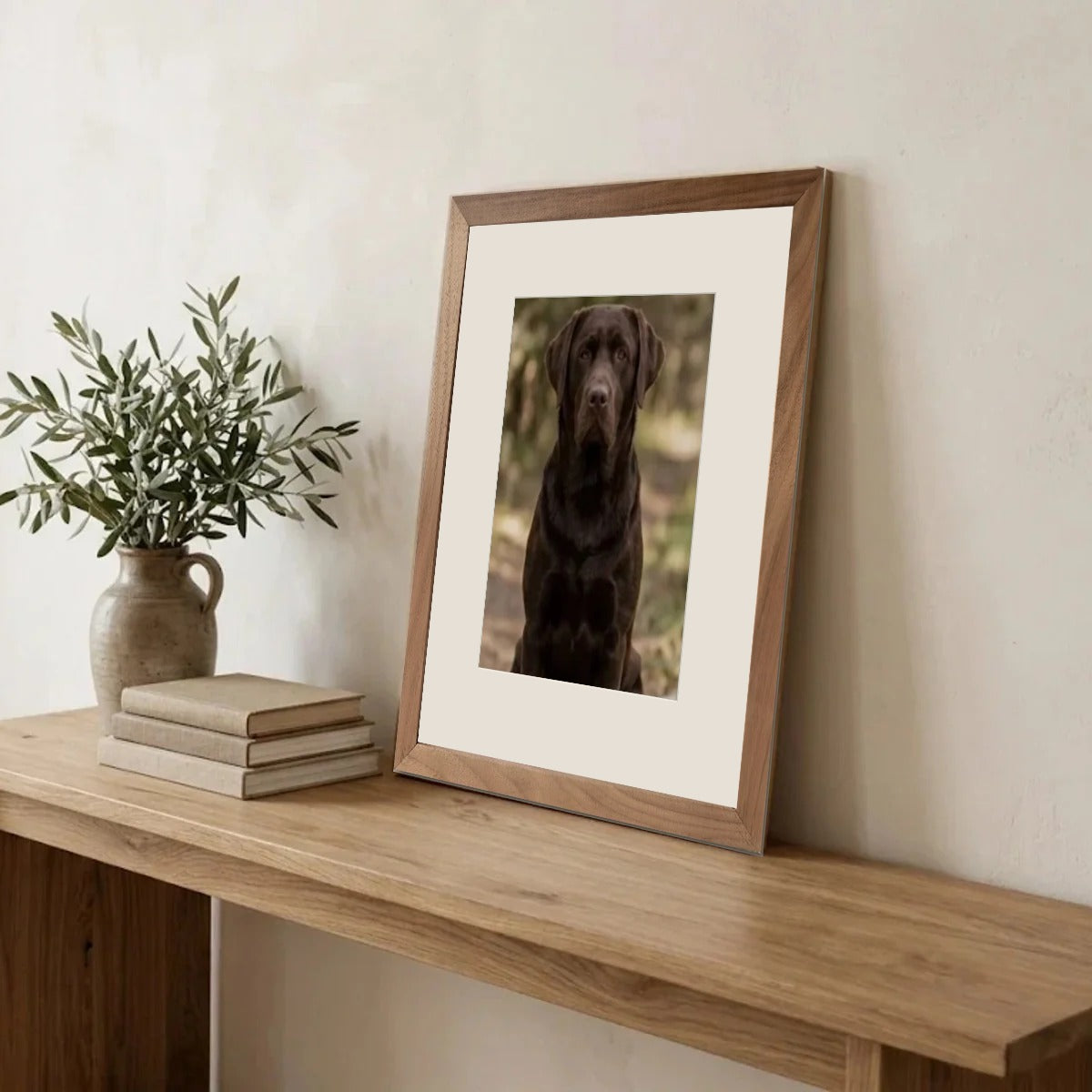
Printed with archival pigment inks, matted and framed behind glare-resistant acrylic, a paper portrait is the most protected option: the mat keeps the print off the glazing, the acrylic blocks UV light and glare, and the frame protects the edges.
How long each one lasts
Longevity depends more on inks, coatings and protection than on the surface alone. As a rule:
- Framed fine-art paper with pigment inks, behind UV-protective glazing, is rated to last for many decades indoors.
- Metal and acrylic are durable and moisture-resistant, but their dyes and photographic papers vary by maker.
- Canvas and wood are usually unglazed, so they're the most exposed to fading and handling over time.
Whatever you choose, hang it out of direct sunlight. See how to preserve your pet's photos for more.
Which should you choose?
- For a rustic, casual space: wood.
- For a big piece on a small budget: canvas.
- For a bold, modern room with controlled light: metal or acrylic.
- For a portrait you'll keep for decades, a gift or a memorial: framed fine-art paper.
Every Everframe portrait is printed on Hahnemühle Photo Rag, color-graded by photographers, and finished in a solid American walnut frame with glare-resistant acrylic, so you get the warmth of wood around a gallery-quality print. Choose the Classic (from $129), the Studio (from $189) or the Gallery (from $299), and see your dog in the frame before you buy.
Questions
Do pet portraits on wood last?
They can, if printed with durable inks and sealed, but they're usually unprotected by glazing and more exposed to light and handling.
Is a metal print good for a dog portrait?
Metal gives vivid color and sharp detail and suits modern rooms, but glossy finishes reflect a lot of light and can make a coat look less natural.
Is canvas or paper better for a dog portrait?
Paper, if detail and longevity matter. Canvas, if you want a casual, frameless piece at a lower price.
What's the most durable way to print a pet photo?
Archival pigment inks on cotton fine-art paper, matted and framed behind UV-protective, glare-resistant acrylic.
See your dog printed on fine-art paper, in the frame, before you buy.