How to Make a Dog Portrait Look Like Art, Not Kitsch
Seven design rules for a dog portrait that hangs with real art: the image, the paper, the mat, the frame, the scale and where you put it.
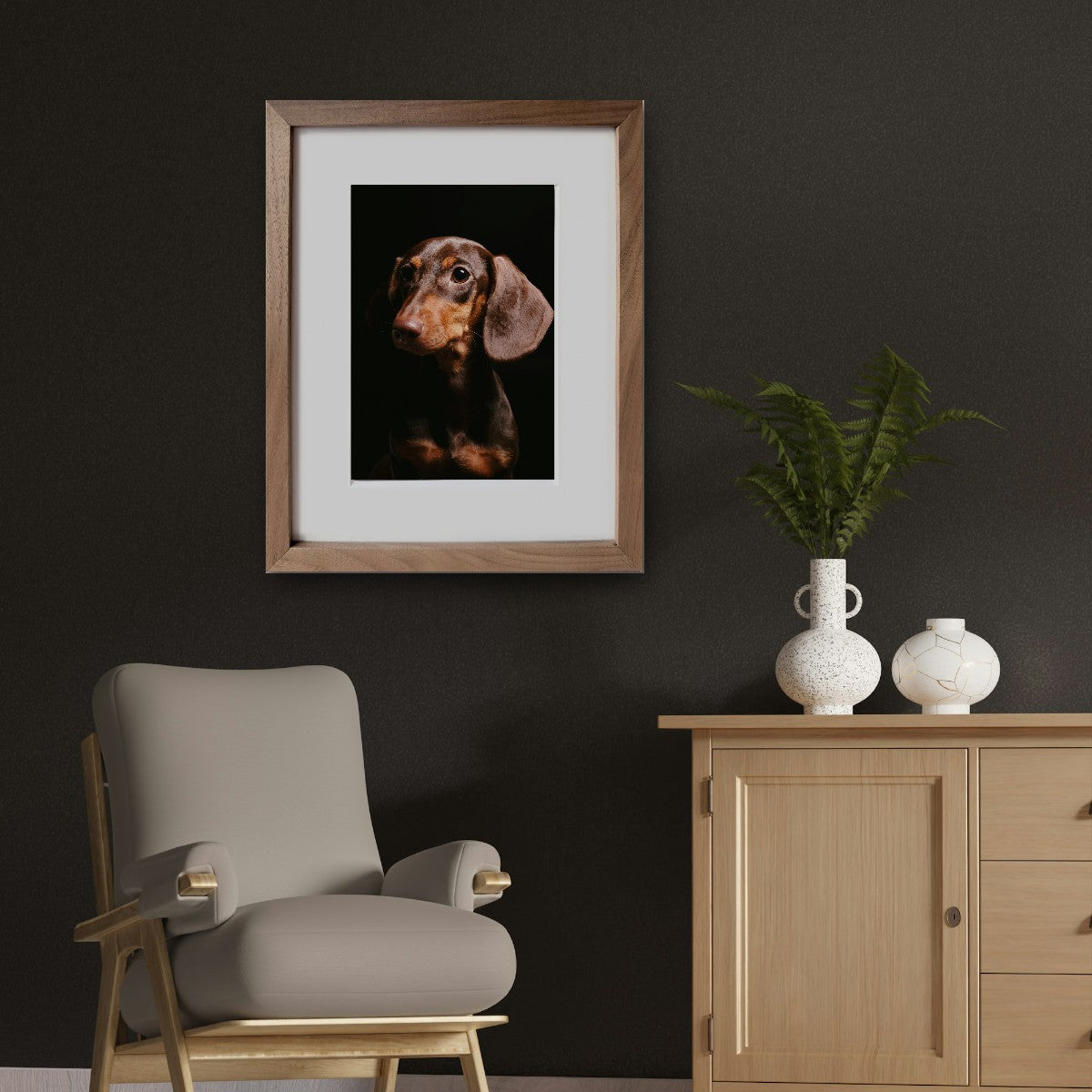
Most pet portraits look like pet portraits. Novelty costumes, cartoon filters, glossy prints behind shiny glass. They're fun, but they rarely belong in a room you've thought carefully about.
A dog portrait can hang beside real art and hold its own. The difference isn't the dog. It's a handful of design decisions that galleries and framers make every day. Here are seven.
1. Start with a quiet image
The portraits that age best are simple: one dog, a calm expression, soft directional light and an uncluttered background. Think of classic portrait photography rather than a snapshot from the park.
- Choose a photo where the eyes are sharp.
- Avoid busy backgrounds, harsh flash and props.
- Skip costumes and themes. They date quickly and turn a portrait into a joke.
If your favorite photo is a little messy, a Fine Art Portrait keeps your dog's face and markings while giving them studio light and a painterly backdrop.
2. Print it on real fine-art paper
Glossy photo paper reflects light and looks like a photo lab print. Matte cotton paper absorbs light and looks like an original. Everframe prints every portrait as an archival pigment giclée on Hahnemühle Photo Rag, a 100% cotton paper used by museums and galleries.
3. Give it a generous mat
A mat is the single biggest upgrade. It gives the image breathing room and quietly tells the eye: this is art. A wide mat on a modest image looks more expensive than a large image pushed to the edges of the frame.
- White or soft white mats suit almost any interior.
- A border of 2 to 3 inches looks considered on 11×14 and 16×20 frames.
- A thicker 8-ply mat adds a deeper beveled edge that catches the light.
4. Choose a real wood frame
Plastic and printed-wood frames give themselves away up close. Solid wood has grain, weight and a finish that improves with age. Keep the profile simple. Ornate gold frames can work in a traditional room, but a clean walnut, natural or gray frame fits most modern homes and lets the portrait lead.
Not sure which finish to choose? See walnut, natural or gray: how to choose a frame finish.
5. Kill the glare
Shiny glass is one of the fastest ways to make a portrait look cheap, especially opposite a window. Glare-resistant acrylic diffuses reflections so you see your dog, not the lamp across the room. It's also lighter and safer than glass.
6. Get the scale right
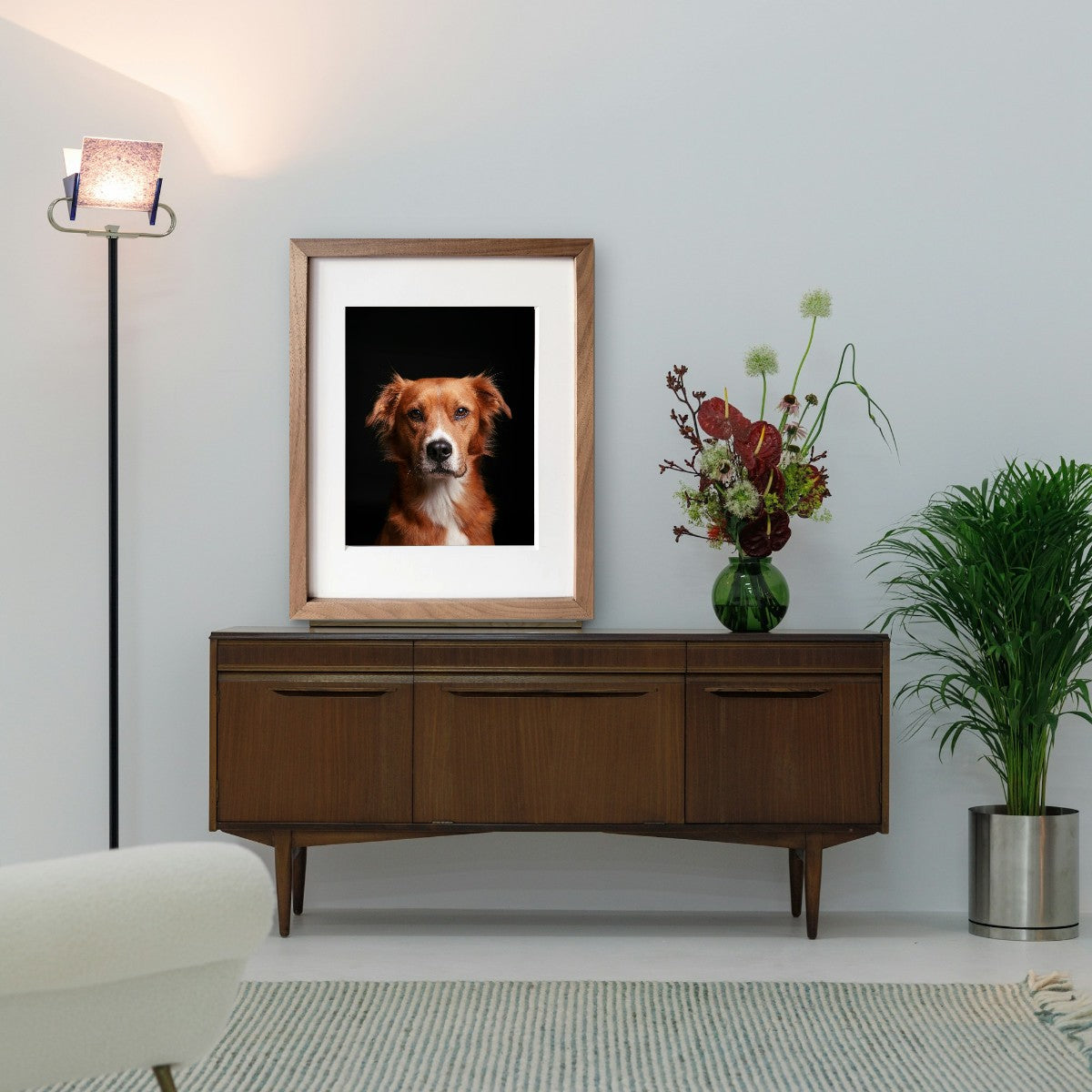
Small art on a big wall looks timid. As a rule, art above furniture should be about two-thirds the width of the piece below it.
- 8×10: a desk, shelf or nightstand.
- 11×14: a bedroom, study or narrow hallway.
- 16×20: above a console, a sideboard or a reading chair.
Our dog portrait size guide goes into more detail.
7. Hang it like art
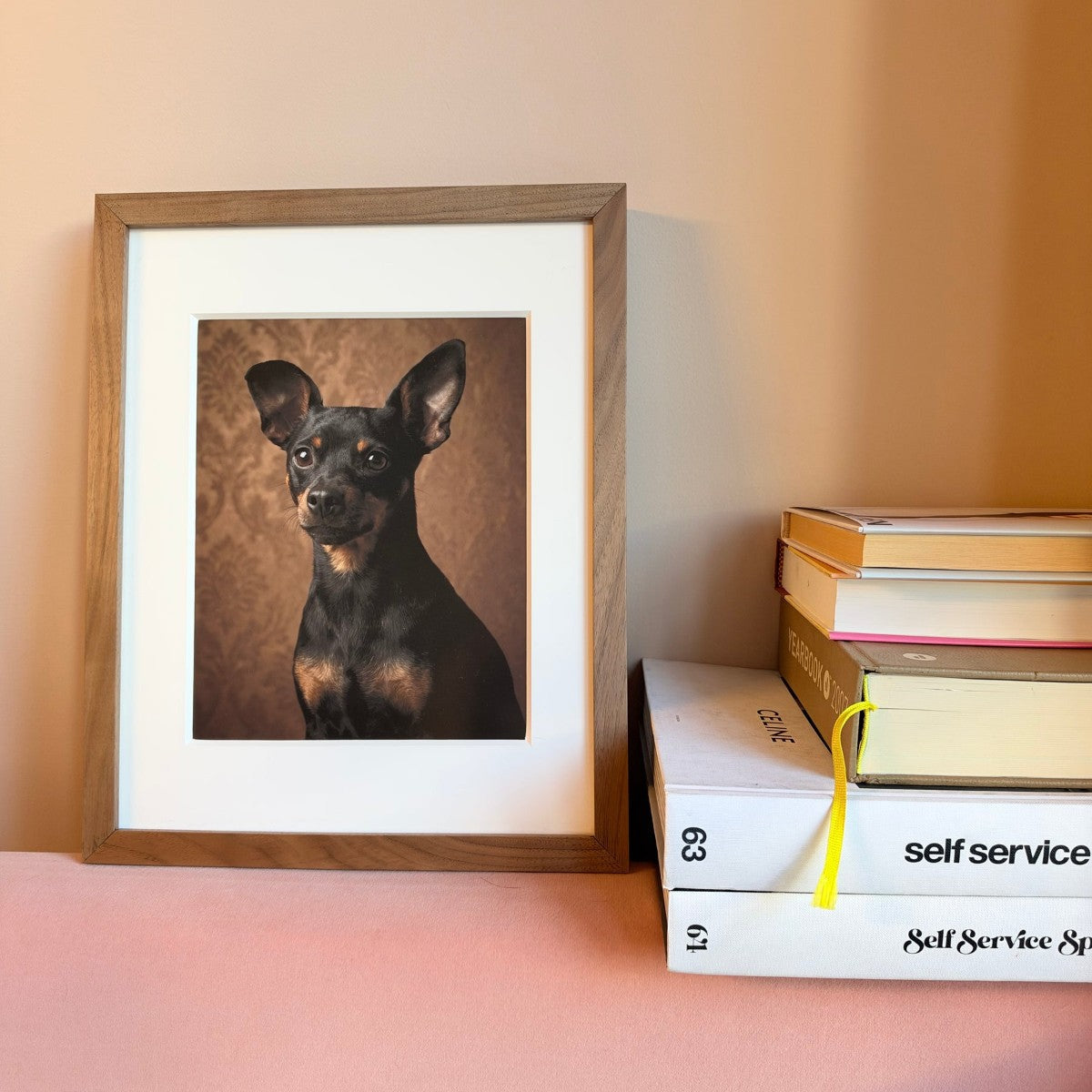
Where you place a portrait changes how it reads. Hang the center about 57 inches from the floor, the height galleries use. Give it a wall of its own, or group it with other art in matching frames. Lean a smaller frame on a shelf with a few books and an object you love.
For more on placement, see where to hang a dog portrait and how to add a dog portrait to a gallery wall.
The short version
Quiet image, cotton paper, wide mat, real wood, no glare, the right size, hung at eye level. Get those right and nobody will call it a pet portrait. They'll just ask where you got it.
Questions
Can a pet portrait look sophisticated?
Yes. Choose a quiet, well-lit image of your dog, print it on fine-art paper, give it a generous mat and a real wood frame, and hang it at the right height and scale.
What makes a pet portrait look cheap?
Costumes and novelty styles, glossy paper, shiny glass, thin plastic frames, and pieces that are too small for the wall they hang on.
Should a dog portrait have a mat?
A mat is the single biggest upgrade. It gives the image room to breathe and is what makes a picture read as art rather than a snapshot.
Where should I hang a dog portrait?
Anywhere you'd hang art: above a console, in a study, along a hallway or in a gallery wall. Hang the center about 57 inches from the floor.
See your dog in the frame before you buy →
Chase Fritchle is the founder of Everframe.