How to Add a Dog Portrait to a Gallery Wall
How to work a dog portrait into a gallery wall with your other art: anchoring, spacing, frame finishes, layouts that work and how to plan it before you hammer a nail.
A gallery wall is the most natural home for a dog portrait. It sits among the prints, photographs and paintings you've collected, and it reads as part of your story rather than a novelty.
Here's how to plan one so the portrait belongs.
Start with an anchor
Every good gallery wall has one piece that's larger or more striking than the rest. A 16×20 dog portrait with a wide mat makes an excellent anchor. Hang it slightly off-center or at the center of the group, then build the smaller pieces around it.
If your dog isn't the anchor, let the portrait be one of two or three mid-sized pieces at eye level, where people will actually look.
Keep the spacing even
The fastest way to make a gallery wall look professional is consistent spacing. Leave 2 to 3 inches between every frame, and keep it the same everywhere. Uneven gaps look accidental even when the art is beautiful.
Hang it at the right height
- Center the whole group, not each frame, about 57 inches from the floor.
- Above a sofa, bed or console, leave 8 to 10 inches between the furniture and the lowest frame.
- The group should be about two-thirds the width of the furniture below it.
Choose your frames: matching or collected
Matching frames in one finish, all with mats, create a calm, gallery-like look. It's the easiest way to make different images feel like a set.
Collected frames feel more personal. Mix two or three finishes, such as walnut and gray, and repeat each finish at least twice so the mix looks deliberate. A white mat on most pieces ties everything together. Our guide to choosing a frame finish can help.
Four layouts that work
1. The trio
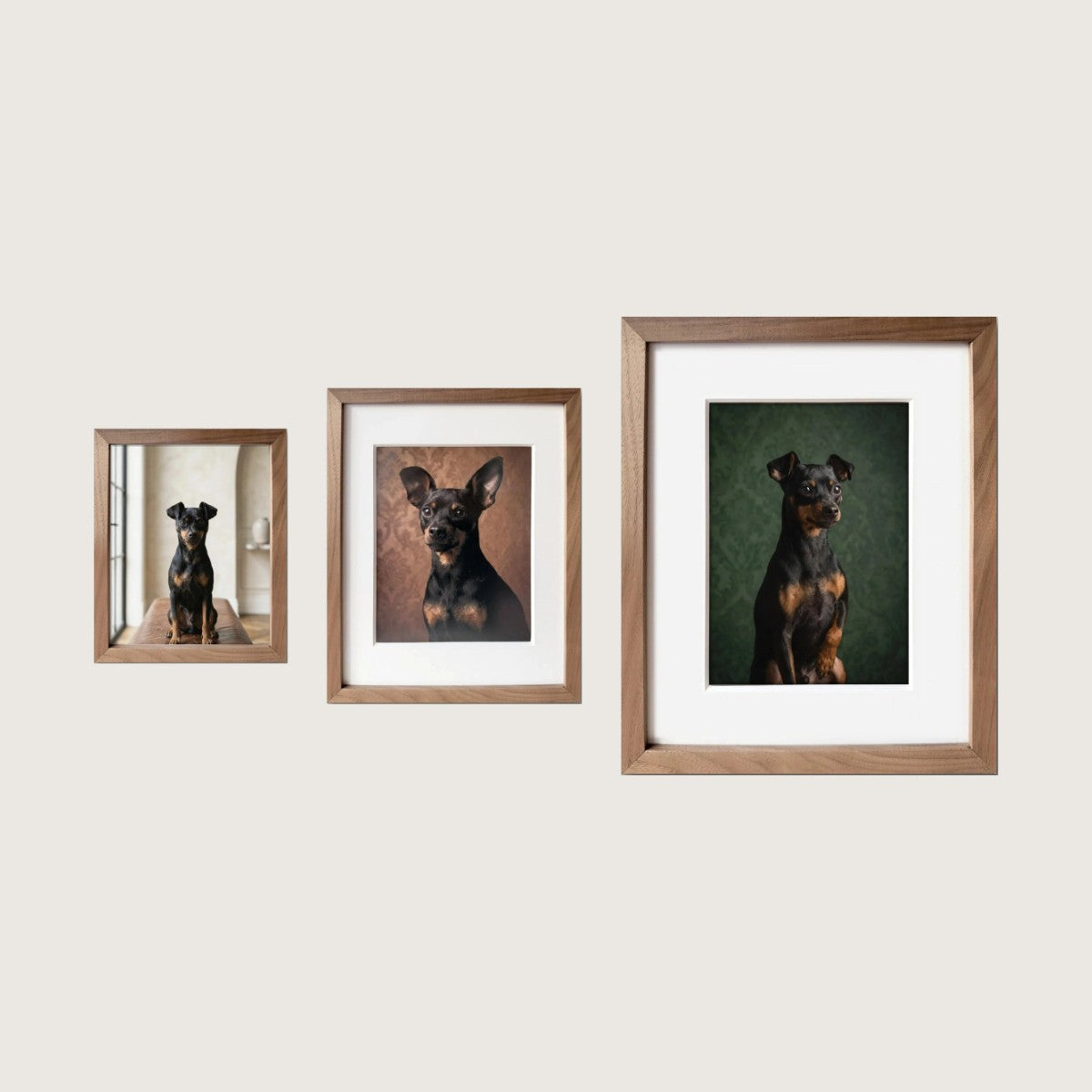
Three portraits in a row, either the same size or stepping up from small to large. It's simple, strong and perfect above a console. It also works beautifully for three dogs, or one dog at three stages of life.
2. The grid
Four or six identical frames in a tight grid. Very modern and very calm. Works best when every piece shares the same frame and mat.
3. The salon wall
Many sizes, hung closely together and filling a whole wall, the way traditional galleries did. Put the dog portrait at eye level near the middle so it doesn't get lost.
4. The ledge
One or two picture ledges with frames leaning and overlapping slightly. Easy to change, no new holes, and ideal for renters. The 8×10 Classic, which comes with an easel back, also stands on its own on a desk or shelf.
Plan it before you pick up a hammer
- Lay every frame on the floor and arrange them until the group feels balanced.
- Trace each frame onto kraft paper and cut out the shapes.
- Tape the paper shapes to the wall and live with them for a day.
- Mark the hanging point on each template, then hammer straight through the paper.
Make the portrait feel like art
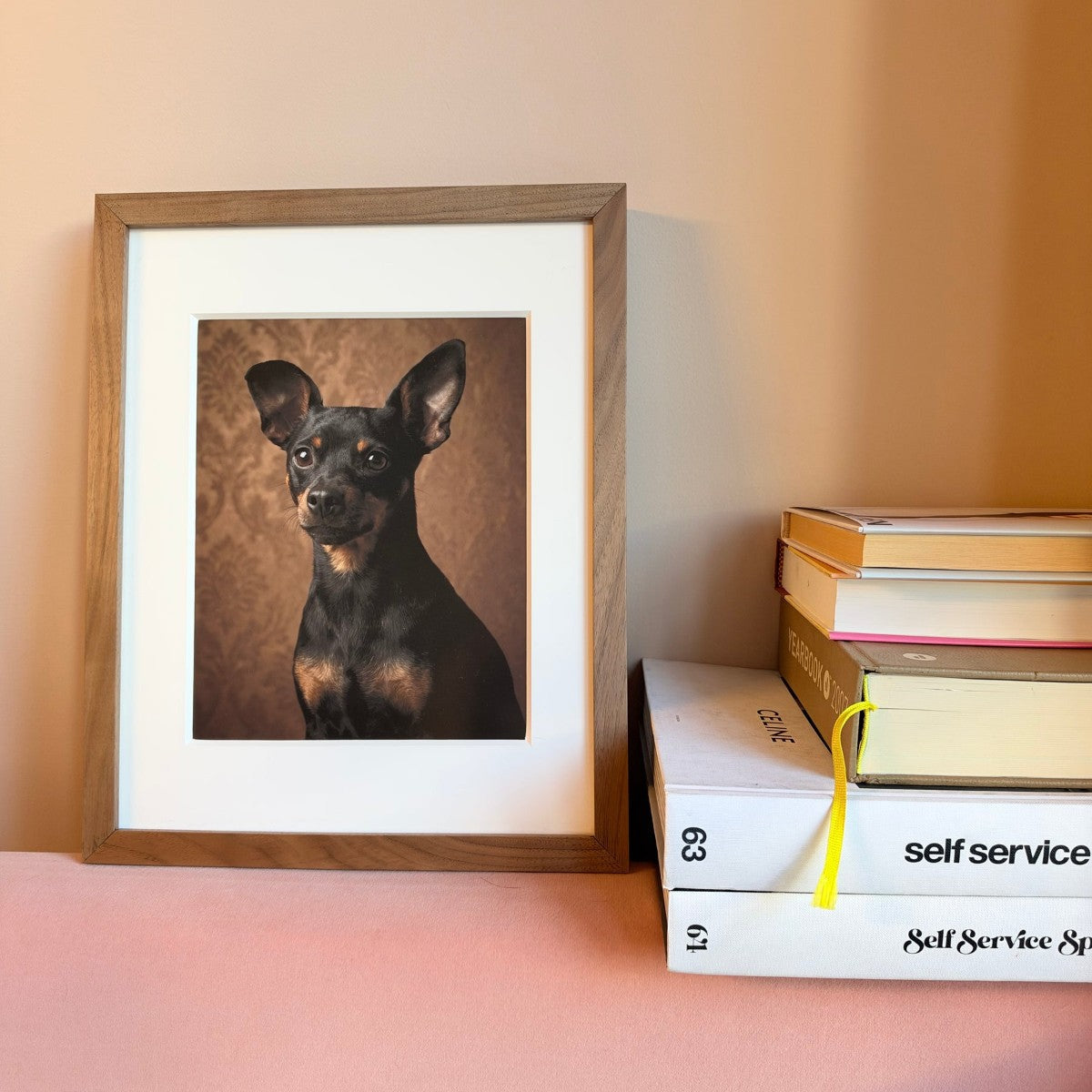
A dog portrait holds its own on a gallery wall when it's treated like the other pieces: printed on fine-art paper, given a generous mat and set in a real wood frame. Read how to make a dog portrait look like art for the details, and our size guide to choose between 8×10, 11×14 and 16×20.
Questions
How far apart should frames be on a gallery wall?
Keep 2 to 3 inches between frames, and keep that gap the same across the whole wall.
How high should a gallery wall hang?
Center the whole group about 57 inches from the floor. Above a sofa or console, leave 8 to 10 inches between the furniture and the lowest frame.
Can a dog portrait go in a gallery wall with other art?
Yes. A well-framed dog portrait reads as art. Give it a mat and a real wood frame, and treat it like any other piece in the group.
Should all the frames on a gallery wall match?
Matching frames create a calm, gallery-like grid. Mixed frames feel more collected. If you mix, limit yourself to two or three finishes and repeat each one.
See all three sizes in the frame →
Chase Fritchle is the founder of Everframe.